The work
Define the scope.
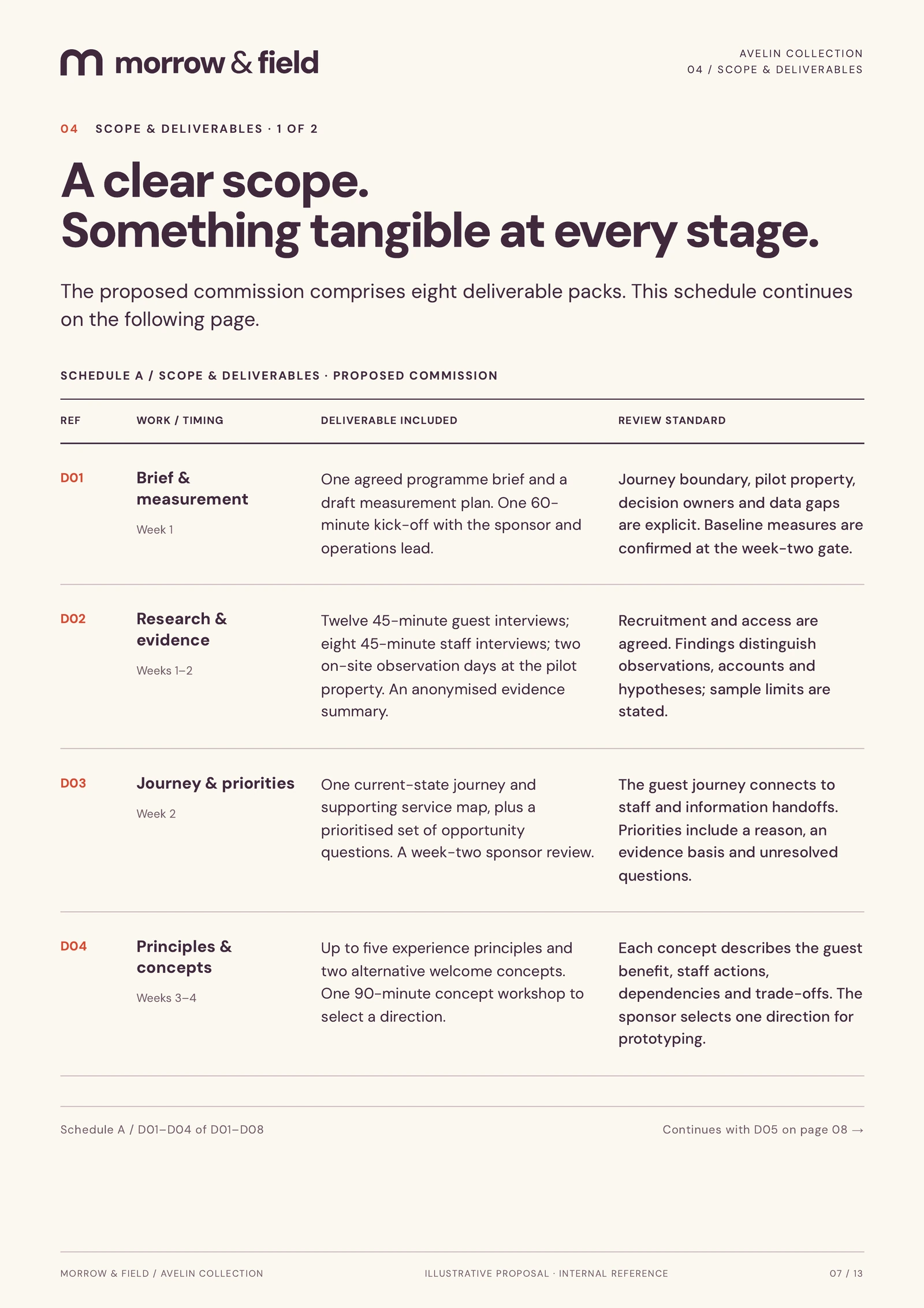
Set out deliverables, responsibilities and exclusions. In the Avelin example, one hotel pilot is included. A wider rollout needs its own decision.
Inspect the scope and boundariesYour expertise.
A proposal you can stand behind.
Practice uses AI to turn your client brief, discovery notes and methods into a branded consulting proposal. Review the scope, deliverables, timeline and fees, then ask for revisions before sharing it with your client.
Card required · Then from $50 USD per seat/month unless you cancel. See details
From client brief to considered proposal
Use Practice to move from a client brief to a proposal you can review and revise. This walkthrough follows an eight-week guest-experience programme for a hotel group, with a pilot at one property.
Client brief · Discovery notes · Your methods
Avelin’s client brief and discovery notes sit alongside the conversation. Add your approach, previous work and brand guidance so the proposal starts from the right place.
Interactive product demo · sample data
A clear commitment
The polished pages matter. So do the decisions inside them: what is included, what it costs and what the client is actually agreeing to.
The work
Set out deliverables, responsibilities and exclusions. In the Avelin example, one hotel pilot is included. A wider rollout needs its own decision.
Inspect the scope and boundariesThe commitment
Show the basis of the investment. The illustrative £48,000 fee is allocated across three phases, with proposed milestones, travel and VAT explained.
Inspect the commercial detailThe delivery
Connect the timeline to the work the client receives. Show where their input is needed and when you will review the pilot and agree what follows.
Inspect the eight-week planMorrow & Field × Avelin Collection
The 13-page Avelin example proposes an eight-week guest-experience programme: understand the current service, shape improvements and test them at one hotel. It sets out deliverables, client responsibilities, a £48,000 illustrative fee and the boundary between the pilot and a wider rollout.
Example proposal · Morrow & Field × Avelin

Loading page 1…
Your way of working
Your approach should carry from one engagement to the next. Practice gives it a place alongside the client’s context and the document you are working on.
Explore the consulting workspaceUse your discovery notes, a relevant previous proposal, your methods and your brand. Keep client-specific evidence separate from reusable guidance.
Ask for options around scope, sequencing or pricing. Review the assumptions behind each option before presenting a commitment to the client.
Check claims, dates, numbers, responsibilities and acceptance criteria. For a tender response, keep the client’s requirements beside the evidence that answers them.
Keep the proposal with the client context and subsequent work. Reuse the method or an independent template copy when the next brief arrives.
Before you begin
What to bring, what you can change, and what this example shows.
Start with the client’s problem, your discovery notes and the outcome they want. Add the work you are prepared to deliver, timing, fee assumptions and known exclusions. Your methods, previous work and brand guidance give the draft more useful context. Review any gaps or assumptions before treating it as a client-ready proposal.
Yes. Bring your approach and relevant previous work into the workspace, and use your practice or client brand as appropriate. A reusable method or template provides a starting point; the client’s evidence, scope and commercial details still need to be tailored for each engagement.
Yes. Keep the proposal in context and ask for a focused revision to the writing, scope, structure or presentation. Inspect the resulting version before sharing. For example, clarify a pilot boundary, change a deliverable or make the assumptions behind a fee more explicit.
Yes. A template copy gives you an independent draft to adapt. Review the client names, evidence, deliverables, dates, fees and exclusions rather than assuming the previous engagement’s terms apply to the next one.
The free generator gives you a starting document to work on and download. Practice is the ongoing workspace around the client: context, sources, reusable methods and the deliverables that follow. The free tool does not automatically transfer its draft or conversation into an account.
Proposal drafting, contract signing and invoicing are separate workflows. Practice also supports native contracts and invoices, but this walkthrough does not send a proposal, accept an agreement, sign a contract or charge a client. Confirm the scope and commercial terms before proceeding.
More on the product in Practice’s documentation.
Start with your next client
Your context, your methods and a clear starting point for the work ahead.
Start your 30-day trialUp to 30 days with an AI usage allowance. See plans and trial details.