The case for change
State the problem, intended outcome, scope and what will stay the same. Explain the practical reason for the change in language the affected teams use. Separate confirmed decisions from choices still open to consultation.
From implementation to adoption
A change management plan connects what will change for each audience to the actions, owners and evidence needed to make the new way of working usable.
Go beyond a communications calendar. Work backwards from the tasks people must perform, the decisions they must make and the support they will need when something goes wrong.
One programme, two connected plans
An implementation plan covers the work needed to deliver the solution: systems, integrations, sequencing and dependencies. A change management plan covers how affected people move from the current way of working to the intended one. They should inform each other rather than run as separate documents.
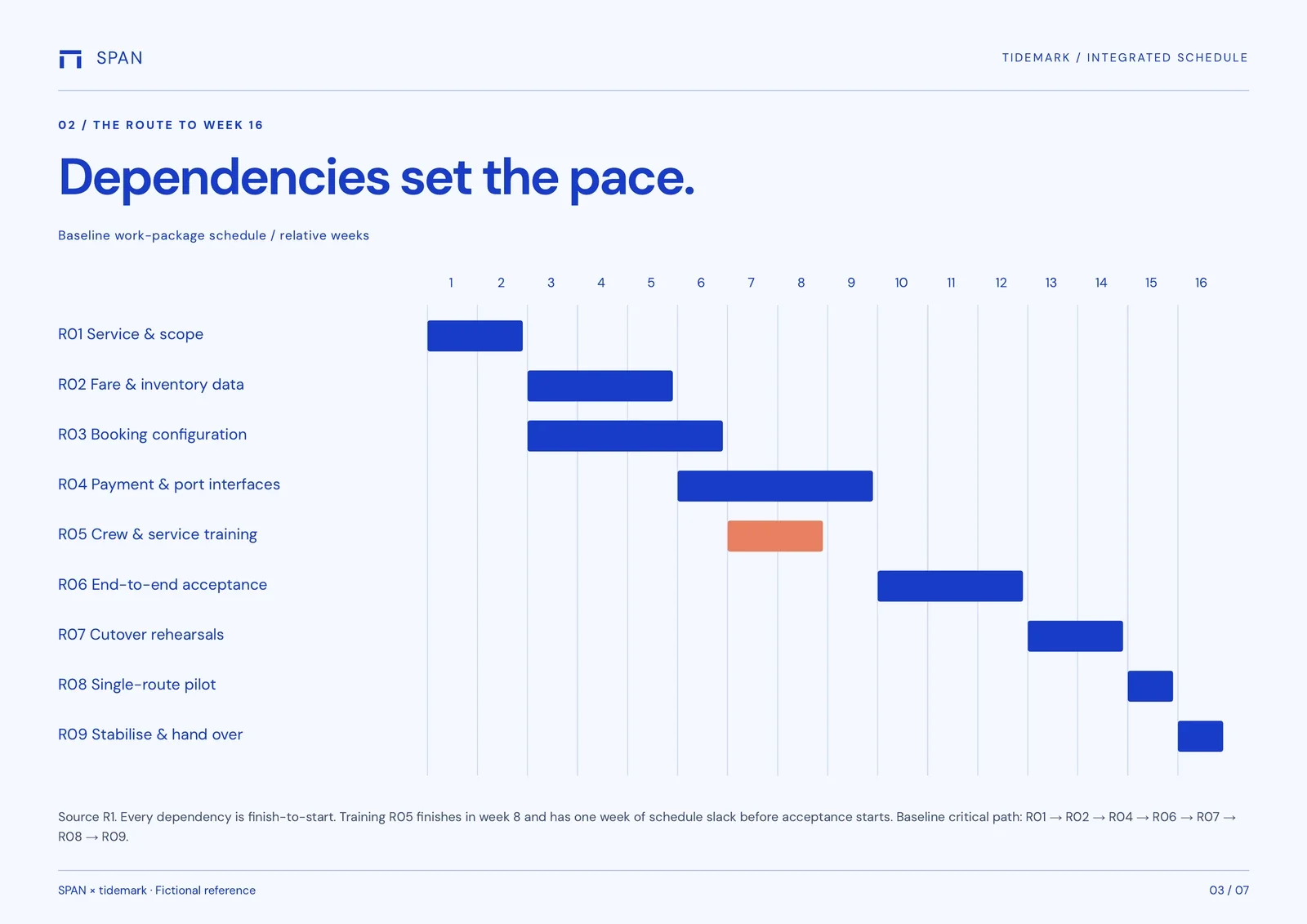
The Tidemark example roadmap connects bookings across the website, contact centre and port check-in. Its delivery timeline spans sixteen weeks and nine linked work packages. But a completed integration does not tell you whether a contact-centre agent can resolve a mismatch, whether a shift knows the fallback or whether a sponsor has accepted an unresolved risk.
The change plan therefore needs audience-specific impacts, readiness evidence, practical learning, communications, support and adoption checks. A delay to a dependency may also require a change to training, launch communications and the support rota.
Worked companion example
Select an audience to explore the change to their work, the action it needs and the conditions for a supported start.
What changes
Agents may keep a private workaround if the shared view omits information they need during a call.
Accountable role: Contact centre lead
What your plan should contain
If an action cannot be connected to an affected audience or a delivery dependency, ask what it is doing in the plan. If a major impact has no action or owner, it is a gap.
State the problem, intended outcome, scope and what will stay the same. Explain the practical reason for the change in language the affected teams use. Separate confirmed decisions from choices still open to consultation.
Describe changes to tasks, roles, information, systems, decision rights and working patterns. Include occasional users, new starters, shift workers and teams handling exceptions. Avoid assuming that one department has one uniform experience.
Record evidence of capacity, understanding, capability, ownership and support. Use interviews, observations and task walkthroughs alongside surveys. A favourable readiness score does not replace a missing operating procedure.
For each impact, name the action, accountable role, due date, dependency and evidence of completion. “Provide training” is less useful than naming the task to rehearse, the cohort attending and how successful performance will be checked.
Match messages to decisions and practical needs: why this is happening, what changes, when action is needed and where questions go. Give feedback a route to a decision owner. Record what changed as a result so consultation is not just an inbox.
Define leading checks before launch and observed behaviour after launch. Assign support coverage and escalation. Compare intended working practices with what people actually do, then adjust the intervention where workarounds or failures persist.
Sequence the human work
Anchor dates to real dependencies. Training against an unstable process can create rework; communicating a launch date before a readiness decision can create avoidable confusion.
Validate impacts with representatives. Resolve role and process questions. Rehearse frequent tasks and exceptions using an appropriate environment. Confirm the support model, readiness criteria and launch decision owner.
Provide named contacts and a clear escalation route. Review issues by severity and audience. Distinguish a usability problem from a missing permission, a training gap or a design defect before choosing the response.
Review task performance, repeat issues and workarounds against the intended process. Speak to people doing the work. Decide which actions to close, adapt or sustain, and hand ongoing ownership to the operating team.
Measure what changed
Choose measures that fit the intended behaviour and can be interpreted fairly. Establish the baseline, definition, owner and review interval before using a number to declare success.
| Activity recorded | Useful follow-up question | Possible evidence |
|---|---|---|
| People attended training | Can they complete the required task and handle an exception? | Observed task walkthroughs, error types and targeted follow-up practice. |
| The announcement was sent | Do people understand what they must do and where to get help? | Questions raised, manager conversations and scenario-based checks. |
| The system is being used | Is the intended process being followed, or are teams maintaining parallel workarounds? | Process observations, exception records and feedback from affected teams. |
| Support tickets declined | Are problems resolved, or have people stopped reporting them? | Ticket themes combined with task outcomes and direct feedback. |
Build from the assessments
Use a change impact assessment to identify affected work, then a readiness assessment to expose the conditions that need attention. Bring those findings into the plan with an owner, dependency and review point. In Practice, keep the supporting context with the engagement and review the generated artefact against the actual client situation.
A plan is not complete because every row is populated. It becomes useful when the owners accept their actions and the evidence can inform a launch or adjustment decision.
An audience impact register, action plan, communications outline and adoption review.
Editable plain-text worksheet · no email required
Useful answers
A project plan organises delivery of the work. A change plan organises the transition for affected people and teams. They share dependencies and decision points; neither should assume the other has covered readiness, learning or support.
Name an accountable sponsor and an owner for coordinating the plan, then assign actions to people with the authority and capacity to complete them. A consultant can facilitate the work, but operating teams need to own the ongoing practices.
Write the specific task and behaviour changes for each audience, use evidence from the actual setting and connect each action to an impact. Remove activities that have no purpose in that context and add the exceptions a generic outline cannot anticipate.