Skip to content

AI report writing
for consultants.

Your analysis.
A report worth putting your name to.

Bring client documents, notes and your own approach into the conversation. Build a report around the decision, refine it with Practice and review the work before sharing it.

Card required · Then from $50 USD per seat/month unless you cancel. See details

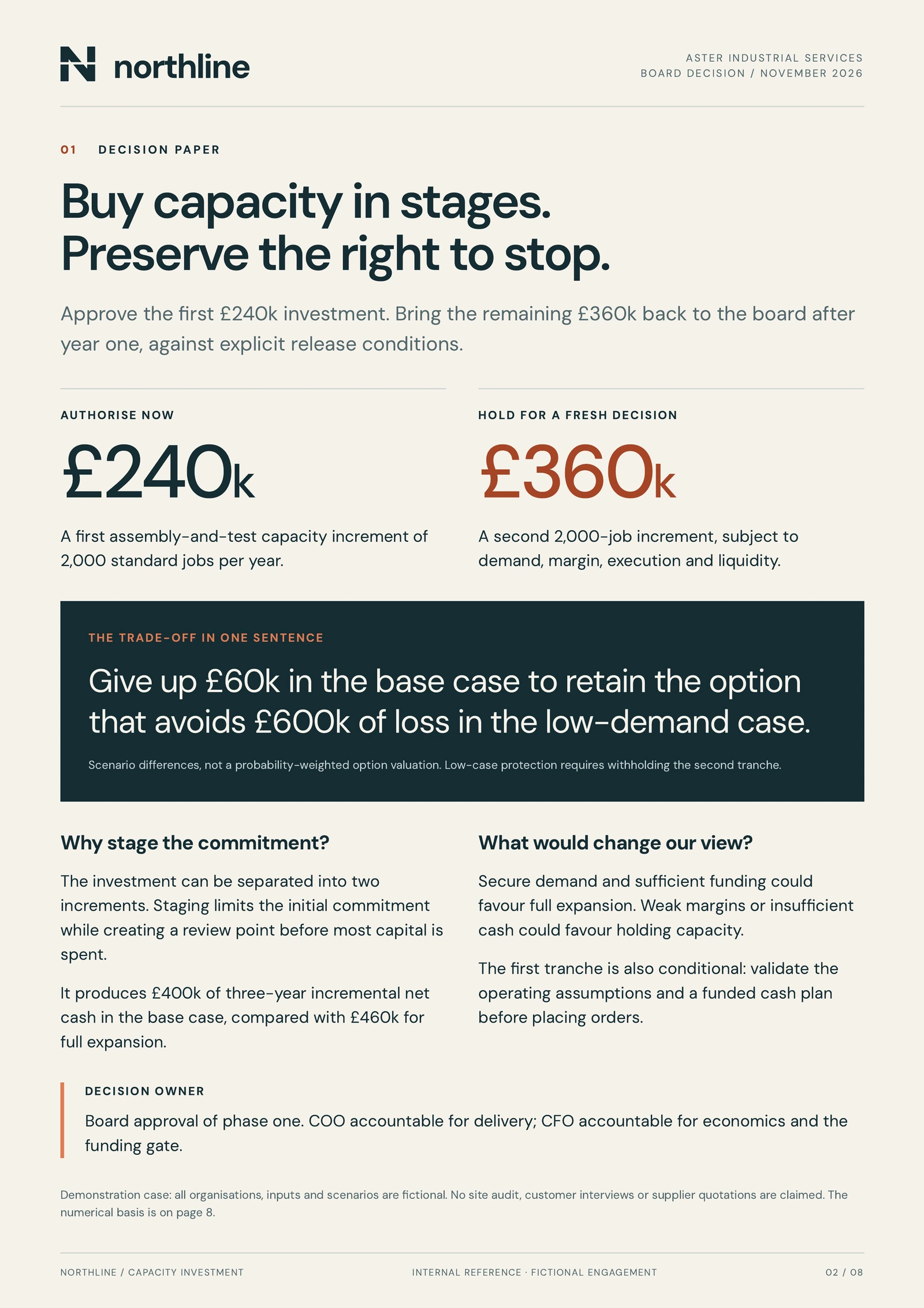
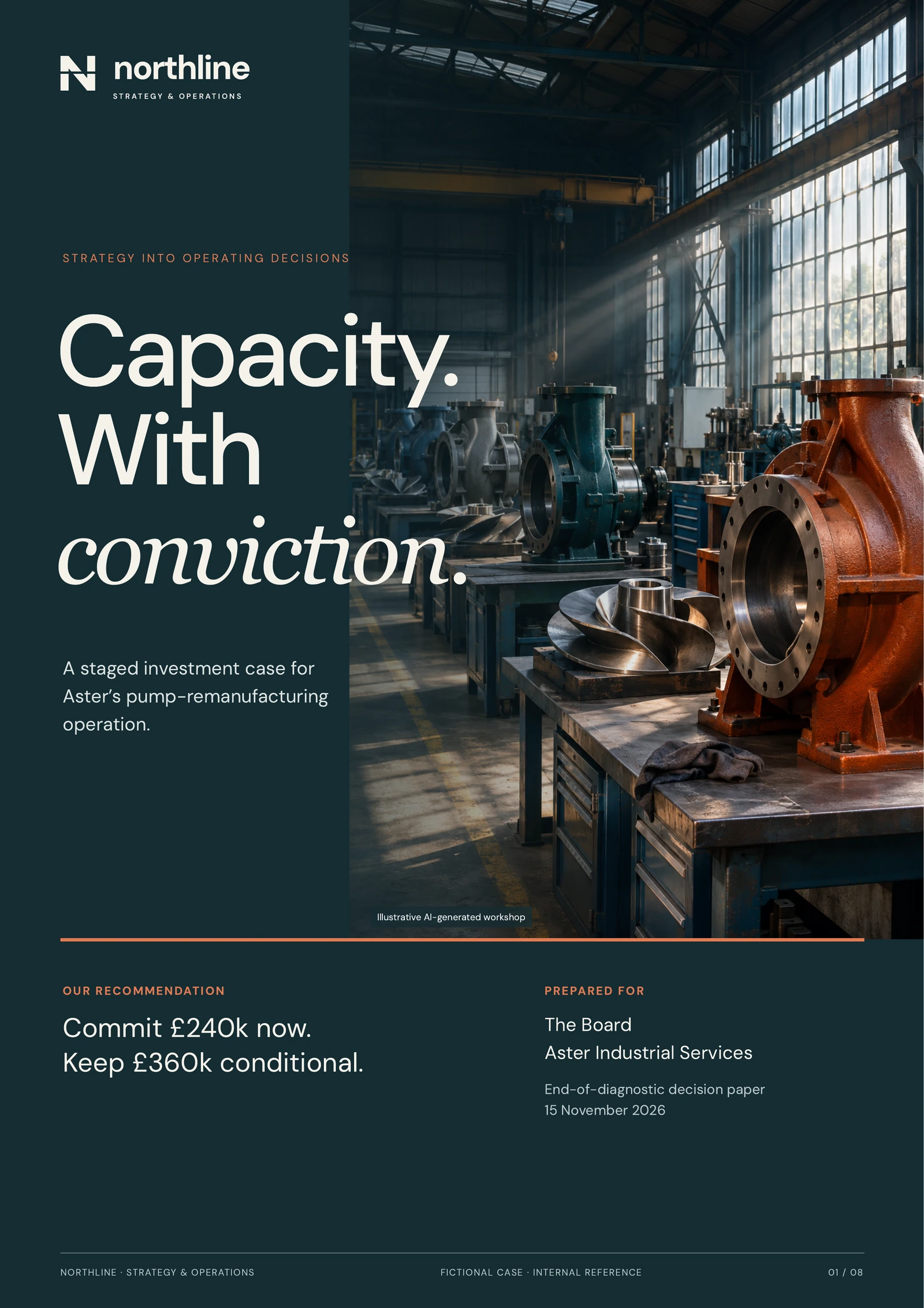
Northline’s Capacity. With conviction. report for Aster: a fictional staged investment case.
Northline × Aster · Illustrative decision reportExplore all eight pages
Your client evidenceYour approachA clear recommendationYour practice’s identity

From client context to considered work

Give the report
a decision to serve.

Follow an illustrative capacity review for Aster. The question is specific: commit to the full expansion now, invest in stages, or hold? The report connects that choice to the assumptions and conditions behind it.

Loading the Practice walkthrough…

You can also read the complete report below.

The client question · Source context · Your brand

Begin with the decision, and what you know.

Aster’s illustrative decision brief and capacity assumptions sit beside the conversation. Explain the audience, the question to resolve and the evidence you want the report to use.

Interactive product demo · sample data

How to create a consulting report in Practice

  1. Bring the question and evidence. Choose the client context. Add the brief, supporting files and relevant notes. Describe who will read the report, what they need to decide and which method you want to apply.
  2. Build and review the draft. Ask Practice to turn the material into a report. Check the structure, analysis and recommendation against the evidence. Make missing information and assumptions visible.
  3. Refine the point that matters. Use a focused instruction to improve the work. In this example, distinguish the first investment from the later decision and explain what must be true before committing more.
  4. Check the finished report. Review the numbers, sources, limitations, design and intended audience. Inspect the report and its export before sharing it with the client.

Inside the illustrative report

A recommendation.
With the reasoning intact.

A good consulting report makes the choice understandable. This example sets out the proposed commitment, the alternatives and the conditions that could change the answer.

The recommendation

£240k now.
£360k conditional.

Separate the first capacity increment from a second investment. The later commitment returns for a fresh decision rather than being treated as already approved.

Read the decision paper

The alternatives

Show the choices.
Explain the trade-off.

Compare staged investment, full expansion and holding capacity. Give the reader a basis for challenging the recommendation, including the assumptions that drive it.

Inspect the options

The next decision

Make the conditions
part of the answer.

State what must be checked before releasing more capital: demand, margin, delivery and funding. Name the decision owners and the review point.

Explore the decision gates

The complete deliverable

Read the work.
Not just the cover.

Explore the executive decision paper, operating context, options, economics and implementation conditions. The final page sets out the numerical basis and limitations.

Northline × Aster · example report · eight pages

Full size
Page 1 of Northline’s executive decision report for Aster Industrial Services: The report. Fictional capacity investment case.

Loading page 1…

Northline for Aster Industrial Services · Page 1 of 8 · Example report

Your judgement is still the centre

Your method.
Your name on the work.

AI can help you organise, draft and refine. You decide what the evidence supports, what the client needs to know and when the report is ready.

Explore the consulting workspace

Start with your materials.

Bring your framework, previous work and brand guidance. Describe the audience and the level of detail so the first draft has a useful direction.

Keep the logic visible.

Distinguish observed facts from assumptions. Check the calculations and cited material, and explain what would change your recommendation.

Make the presentation yours.

Refine the structure, language and design through the conversation. Check headings, charts and page layout in the finished document and the exported copy.

Different engagements. A clear purpose.

Build around the
question in front of you.

Use the conversation to shape the report for its audience and purpose. Start with the decision or problem, then choose the structure that makes the work useful.

Executive decision papers

Bring the recommendation, options, commercial assumptions and approval conditions together for a sponsor or board.

A decision to make

Diagnostic reports

Organise the evidence, findings and limitations. Explain the causes you have investigated and the questions that remain open.

A problem to understand

Client recommendations

Turn the analysis into proposed action, with priorities, responsibilities and the conditions for reviewing progress.

A next step to agree

Before you begin

A few useful
answers.

What to bring, how to refine the work and what to review before it reaches a client.

What should I provide to create a consulting report?

Start with the client question, the intended reader and the decision the report should support. Add relevant documents, notes and data, along with your method, preferred structure and brand guidance. Explain where the evidence is incomplete and which assumptions need checking. The quality of the brief and evidence affects the usefulness of the draft.

Can I refine the report through the conversation?

Yes. Keep the report in context and ask for a specific change: sharpen the executive summary, compare an alternative, clarify an assumption or make the next decision explicit. Review the revised work before treating it as finished. The walkthrough illustrates a focused instruction about a conditional second investment.

Can reports reflect my consulting practice’s brand and method?

Provide your brand guidance, examples of previous work and the approach you want to use. Ask Practice to apply them to the report, then check the result. Use the Northline example as inspiration for your own report.

Can I download a report as a PDF?

For supported report formats, you can print the report or download a PDF when those options are enabled. Review the exported result, including pagination, charts and typography, before sending it to a client. You can download the complete eight-page PDF shown here without an account. Available export options depend on the type of artefact you create.

Does AI check that the report is correct?

AI assistance does not replace your review. Check the source material, dates, calculations, assumptions and conclusions. A referenced claim still needs to be supported by the source it cites. In the example, the numerical basis is included so the reader can inspect the assumptions behind the recommendation.

Can I keep a report with the client engagement?

Yes. Work in the relevant client and engagement context so the conversation and deliverable belong with that piece of work. Check the intended audience and access before sharing. Explore the workflow in the product demo above.

How is a consulting report different from a proposal?

A proposal defines work you are asking a client to agree to: scope, deliverables, approach, timing and fees. A report communicates the work’s analysis, findings, recommendations and next decisions. Practice supports both within the wider client workflow.

For the work your clients rely on

Bring a question.
Build the case.

Your evidence, your judgement and a report the client can work with.

Start your 30-day trial

Up to 30 days with an AI usage allowance. See plans and trial details.